Update on the DOE’s New “3-Year Agreements”

We wrote to our clients about the DOE's new 3-year settlement agreements in February after we became aware that the City might start offering them to some clients who sue for private school tuition reimbursement. At the time, we had just received our first of such offers on behalf of a client and we weren’t thrilled with the language of the offer.

Since then, more of you have heard from us letting you know that the DOE is offering you one of these “deals.” Understandably, clients have a lot of questions about the pros and cons, and each family’s situation is unique. For some, the risks and downsides outweigh the benefits. For others, the reverse is true and taking the deal makes a lot of sense.

Now that we’ve seen more of these offers come in, we want to revisit this issue again on the blog, clearly listing the pros and cons. Please note that this is based on the language of the offers we have seen thus far. The DOE could always change the terms in the future.

Pros:
•    Might speed up the tuition reimbursement process in years two and three of a 3-year agreement.
•    Might secure a settlement amount you are happy with for two additional years.

Cons:
•    If tuition increases, you are basically locked into the dollar amount you agreed to; we are only allowed to negotiate a small Consumer Price Index adjustment. Further, any negotiation of the dollar amount of your settlement completely negates the promise of a “speedier” process.
•    The agreement is void if the parent is not fully cooperating with the IEP process or if the IEP changes “significantly.”
•    The child can’t change schools without voiding the agreement.
•    The settlement must still be approved each year by the NYC Comptroller’s office—usually the slowest part of the reimbursement process.
•    Even with this agreement, the family must still go through nearly the same process: private evaluations/updates as needed, IEP meeting, ten-day notices prepared by an attorney, submission of payment and other records, and, as mentioned above, comptroller approval each year.
•    And finally: Nothing in the agreement guarantees that the DOE will settle your case in years two and three. 

That last bolded bullet point is a big one. The city could sign one of these three-year agreements with you and still decide to litigate and take your case to an impartial hearing; they aren’t promising to settle, they are promising to pay you a certain dollar amount if they decide to settle. 

In his 2014 Special Education Initiative, the Mayor promised, among other important things, to improve the speed of the tuition reimbursement process.  In politics, it’s important to be able to say you are doing something, and while we applaud any effort to make the process for reimbursement move more quickly, the greatest inefficiencies in the speed of reimbursements seem to reside in the approval process with the NYC Comptroller’s office, and the nature of this problem has yet to be fully explained or addressed. 

One final note: Some people have called to ask how they can get a 3-year agreement for their child’s case. Unfortunately, these settlement agreements can’t be requested by a parent; they are offered by the DOE on a case by case basis. It remains unclear at this early stage what criteria the DOE is using to decide who to offer them to and who not to.

    If we receive a renewable agreement offer from the DOE for your case, we will reach out to talk about the particulars of your situation. 
Summer Spots for Campers at Camp Ramapo

As you may know, Skyer Law attorney Teri Horowitz is the Board president of Ramapo for Children, which, since 1922, has run a residential summer camp in Rhinebeck, NY for children with special needs aged 6 to 16. 
 
Less than two hours from New York City, Camp Ramapo operates on a 250-acre campus of wooded lakefront property. It is an inclusive summer camp designed for children with learning, social, or emotional challenges, including children with autism. You can watch a 2-minute video about the camp by clicking the link above.
 
There are still several spots for new campers remaining in Session 2 (July 10 – July 28) and Session 3 (July 30 – August 18). Applications are open until the spots are filled.
 

AHCA Cuts to Medicaid Will Harm Special Education, Waiver Programs

There is a lot going on in Washington, DC right now. But there is one ball we cannot afford to take our eyes off of: the American Health Care Act (AHCA), which was passed by the US House of Representatives only last week and is now up for consideration by the US Senate. 

We have been watching the progress of the AHCA closely. Here are some of the issues we think our clients should be aware of.


Unprecedented Medicaid Cuts

The meat of the bill is the massive defunding of Medicaid by 25% of its entire budget—a total of an astounding $880 billion in cuts by 2026.

Medicaid is arguably our nation’s most critical entitlement, providing health insurance and services for 75 million Americans. But focusing for a moment on our own client community, it touches special needs children’s lives in two very important ways: special education funding and Medicaid Waiver funding.
 
1. Special Education Funding

Since 1988, Medicaid has allowed schools to seek reimbursement for medically necessary services provided to Medicaid-eligible children with IEPs or IFSPs through Early Intervention. This includes diagnostic screenings (Early Periodic Screening Diagnostic and Treatment Benefits or EPSDT), related service instruction, counseling, social workers, school nurses, the purchase and updating of specialized and adaptive equipment and assistive technology, and more. Nationwide, schools currently receive roughly $4 billion in Medicaid reimbursements. If the AHCA becomes law, school districts will have the same obligations to provide these services for students with IEPs and IFSPs under the IDEA, but without these funds to do it. 

What this means practically, is that the AHCA constitutes a $4 billion cut to special education. Whether your child goes to private school or public school, if they are Medicaid-eligible or not, cuts this significant to school districts will have a ripple effect.

You can learn more about how Medicaid cuts impact special education by reading the May 3rd New York Times article ("A Little Noticed Target in the House Health Bill: Special Education") and COPAA’s press statement ("Save Medicaid in the Schools!") from March 21st after the first version of the AHCA was introduced.
 
2. Medicaid Waiver Funding
Many of our clients whose children have significant disabilities receive Medicaid Waiver services. The $880 billion in proposed cuts (25% of the overall Medicaid budget) by 2026 would be implemented via a per capita cap on certain groups of people. These cuts would impact all Waiver services.

Because children constitute half of all Medicaid beneficiaries but less than 20% of Medicaid funds are allocated to them, the overall cuts impact children disproportionately. New York’s Waiver program allows qualifying children to receive home and community-based services. Many of our clients, particularly those with children on the autism spectrum or others with significant disabilities, receive family supports like respite services, or are able to get help paying for specialized recreation programs, therapeutic supports for developing self-help skills in the home, reimbursement for specialized medical or adaptive equipment, job coaching for young adults, transportation funds for medical or therapeutic appointments, toilet training and diapering supplies, and much more. 

These programs are highly individualized to meet the specific needs of the child. And unlike school-based services under IDEA, there is no end date for these services; the Waiver program continues into adulthood, and the offerings evolve to meet the person’s changing needs. 


“Pre-existing conditions”

The AHCA as-written would end the ACA/Obamacare’s ban on denying medical insurance to people with “pre-existing conditions.” Instead, it would require the creation of so-called “high-risk pools” that people with pre-existing conditions could join—a separate and very unequal way of insuring sick and disabled people by charging them more expensive premiums. 

The big question for parents is, of course, is my child’s condition on “the list”? But there is no list; insurance companies will determine their own practices. This fact sheet by the Kaiser Family Foundation summarizes what was commonly declinable prior to the ACA. This gives us a sense of what insurance policies might look like in the future if this provision remains in the final law. We know that in the past many conditions and medications (like epilepsy, cerebral palsy, serious mental health issues, or coverage for some autism-related medications) applied to “our kids.”


What Next?

If these concerns resonate with you, we are told that the best thing to do is to contact your US Senators. However, New York’s two Senators, Senator Schumer and Senator Gillibrand, have already firmly stated their opposition to the AHCA. 

Ultimately, this fight depends on turning more ‘yes’ votes into ‘no’ votes. So a more impactful strategy may be to encourage your friends and family who live in states with undecided or ‘yes’-declared Senators to make a phone call.

You can call any US Senator’s office by phoning the Senate switchboard and asking to be connected (202-224-3121). For email or district contact information, you can search on the contact page of the Senate website.

You can also write (snail mail) to any Senator using this convention:

Office of Senator (Name)
United States Senate
Washington, D.C. 20510

Jesse Cole Cutler to speak at MCC’s second annual autism conference, May 23

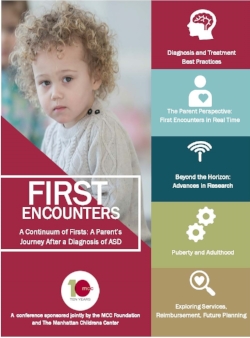
Skyer Law partner Jesse Cole Cutler will be leading a workshop titled "Understanding the Impartial Hearing Process" at MCC's second annual autism conference, First Encounters: A Continuum of Firsts, on Tuesday, May 23rd at the SUNY Global Center (116 East 55th Street).

This comprehensive, day-long, free conference focuses on empowering families throughout the continuum of firsts: diagnosis, treatment options, school selection and funding, OPWDD services, puberty, special needs trusts, and more.

Other expert presenters include: Dr. Bridget A. Taylor, Psy.D. BCBA-D, Sarah Birnbaum, Magdalena Maldonado, Carol Lincoln, Dr. Cecelia McCarton, M.D., Gary S. Mayerson, Esq., Dr. David Salsberg, Psy.D., and Dr. Amy Davies Lackey, Ph.D., BCBA-D.

MCC's SECOND ANNUAL AUTISM CONFERENCE
Tuesday, May 23, 2017 from 9:00 AM to 4:30 PM
SUNY Global Center, 116 East 55th Street
Registration via MCC's Eventbrite page

Greg Cangiano to speak on “Special Needs Advocacy and Resources” panel in Queens on May 3rd

Regina Skyer & Associates senior partner Greg Cangiano will speak Wednesday, May 3rd at 7:30pm on a panel titled “Advocacy and Resources to Your Special Needs Child” at the Reform Temple of Forest Hills in Queens.

This free panel discussion is aimed at New York City families who are still learning what resources are available for their special needs children and what advocacy entails. Along with Mr. Cangiano, the panel will include veteran special education parents, a school psychologist, an educational administration professional, and a pediatric neuropsychologist.

All are welcome to this free event. If you know someone who is at the beginning of their special needs parenting journey, please share this opportunity with them.

Directions: The Reform Temple of Forest Hills is located at 71-11 112th Street in Forest Hills, Queens. LIRR: Forest Hills Station; Subway: Forest Hills - 71st Avenue on the E/F/M/R lines; Bus: Q60, Q23, or Q65.